TROA · Volunteer CTO · Active since 2026
Active
Building TROA’s technology function.
TROA’s technology mandate extends beyond shipping software: set direction with the board, turn departmental needs into a coherent portfolio, and build the team that can sustain it. The initial software foundation was built hands-on; the work now combines continued product engineering with leadership across software, design, Network Engineering, and IT Operations.
- Organization served
- More than 50 volunteers and an 800-plus-member community, with technology supporting public programs and the people who operate them.
- Portfolio
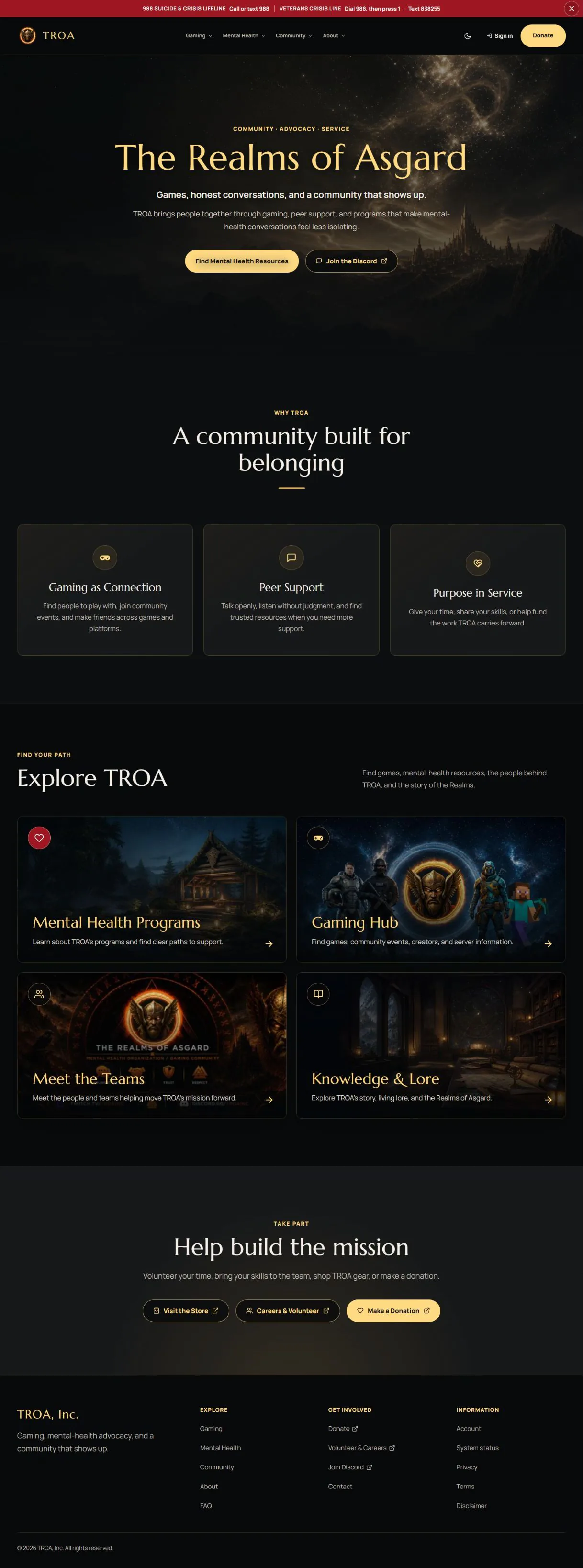
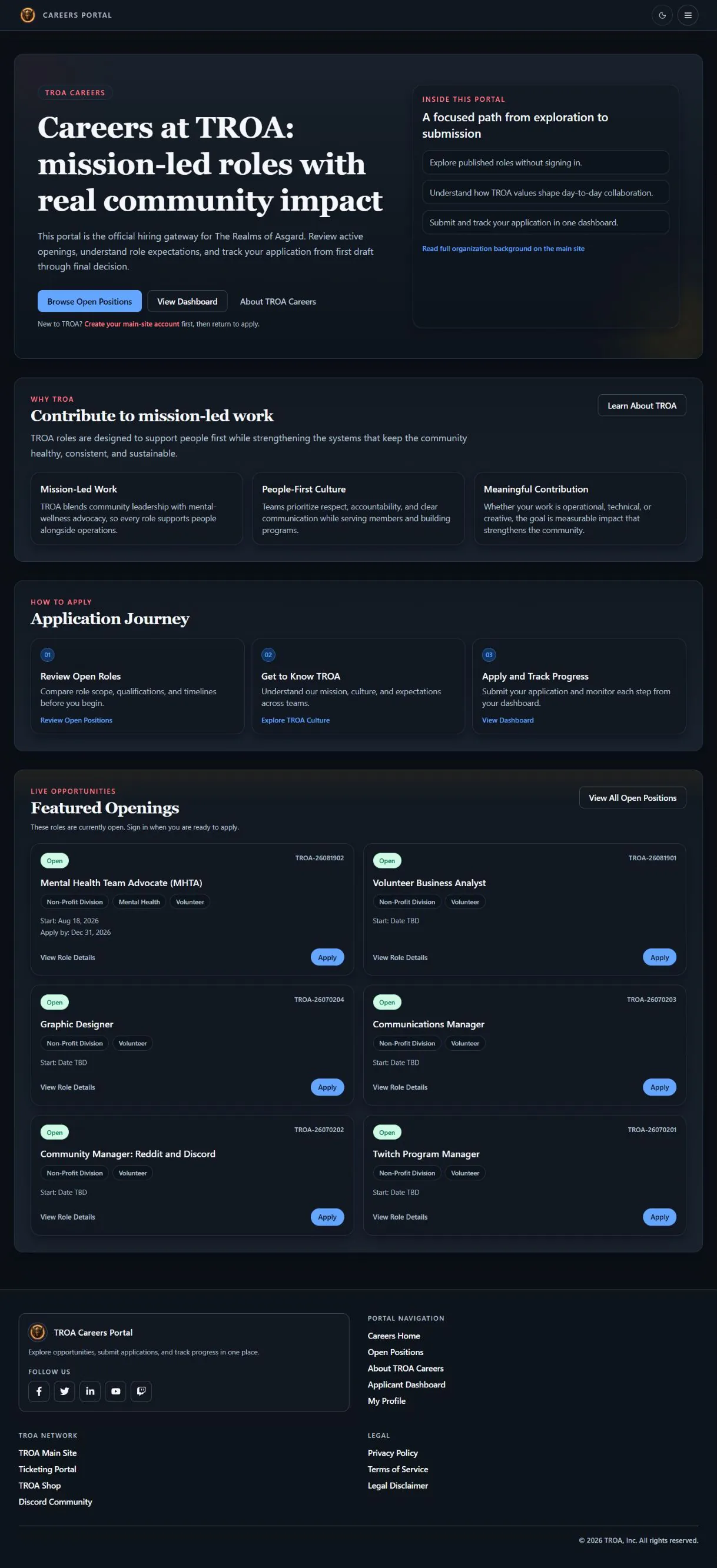
- Public platform and identity, recruitment, learning, member support, administration and reporting, mapping, assistant, infrastructure, and game services.
- Technology group
- Two developers, two UI/UX designers, three to four network engineers, and two IT Operations specialists.
A portfolio, not a collection of sites
Public services, volunteer recruitment, learning, member support, administration, reporting, and game services serve different audiences and carry different risks. The work is to give them a coherent foundation without forcing them into one application or one trust boundary.
- Shared foundation
- Identity, access patterns, content, and audit history connect the ecosystem where consistency reduces friction.
- Purpose-built products
- Each product keeps the workflow and interface its users need, from applicants and learners to members seeking support.
- Private operations
- Role-scoped tools give HR, finance, legal, IT, program, and support administrators direct control of recurring work.
An operating model for shared ownership
Technical leadership spans organizational direction and implementation. Board and departmental priorities are translated into scope, controls, and delivery decisions; hands-on product work continues while specialist teams own their disciplines.
- Direction and tradeoffs
- Set priorities with the board and resolve compliance, policy, timeline, capacity, and cross-department compromises before they become implementation problems.
- Hands-on delivery
- Remain hands-on from product and interface design through application architecture, data, security, deployment, and ongoing operation.
- Specialist ownership
- Network Engineering and IT Operations own specialist execution while remaining part of one accountable technology function.
Decisions that make the portfolio durable
- One identity, several trust boundaries
- Products share Supabase identity where appropriate, while privileged operations stay server-side and administrative areas remain separately authorized.
- Operators should not need a developer for routine work
- Admin workflows turn repeated requests into governed self-service for content, people, tickets, reporting, hiring, and learning.
- Live state must survive change
- Versioned course content, controlled publishing, private resources, and transactional revision workflows preserve the learner experience as training evolves.
The current phase
The portfolio is active and expanding. The current phase is increasing engineering capacity and formalizing ownership, review, and delivery across the team, while the CTO role remains hands-on in product and engineering decisions.